Frozen vs fresh vegetables
Featured Fact
Unless picked straight from the vine, ‘fresh’ peas are often starchier and less sweet than frozen ones because enzymes break down their sugars into starch during transit.
Source: https://www.bbc.co.uk/future/article/20210701-the-hidden-history-of-the-peas-in-your-freezer
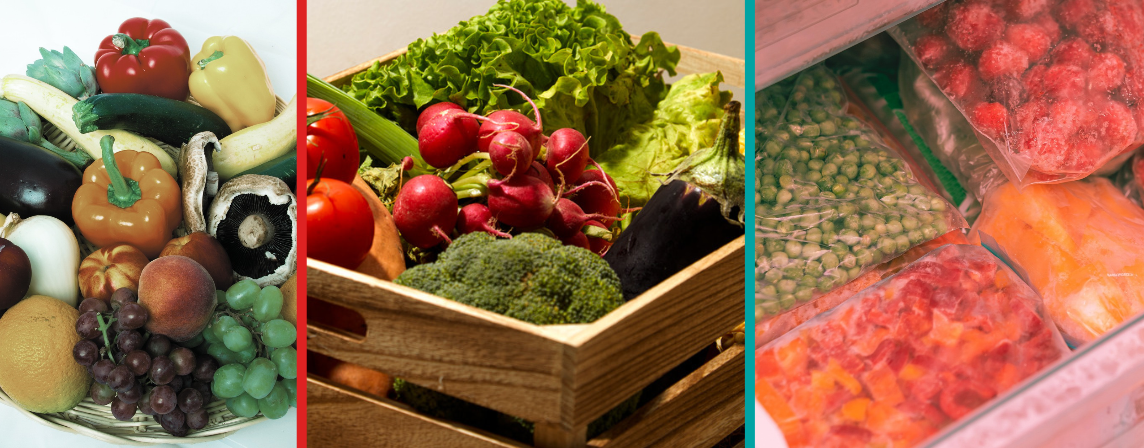
Frozen vegetables are usually just as nutritious as those deemed ‘fresh’, and sometimes more so. Freezing simply stops the clock a few hours after harvest, while a fresh vegetable carries on losing vitamins all the way to your plate.
That is why the NHS treats the two as equals, with 80g of fresh, canned or frozen vegetables each counting as one of your 5 A Day.
What happens when a vegetable is picked
Vitamin C is the first element of degradation once veg is picked. Researchers at the University of Chester describe produce as typically over 90% water, with respiration rising after picking and causing moisture loss and quality deterioration. The same report calls vitamin C by far the least stable nutrient, because it reacts with oxygen and leaches into water. Scientists therefore use it as a marker: if vitamin C has held up, most other nutrients will have too.
Not everything fades at the same speed. The Chester team found no clear trend for beta-carotene during storage, although it is highly sensitive to light. So a headline about lost nutrients is usually a headline about vitamin C.
What happens when veg is frozen?
Freezing soon after picking means the vegetable is in better condition when it is cooked, compared to fresh veg that has been stored for more than a few days. Speed is the whole point. Birds Eye says its garden peas are picked and frozen within 2.5 hours.
The Food Standards Agency describes a freezer as a pause button. The cold delays the chemical reactions inside food rather than stopping them completely, which means you can’t just keep veg frozen indefinitely.
Testing fresh vs frozen
In 2013 Leatherhead Food Research bought fresh and frozen vegetables from four supermarkets, kept the fresh ones in a fridge for three days, then analysed both. They found that frozen matched or beat three-day-old fresh in most UK comparisons, with spinach the clear exception.
| Vegetable | Vitamin C, frozen (mg/100g dry matter) | Vitamin C, fresh after 3 days (mg/100g dry matter) | Beta-carotene, frozen (mg/kg dry matter) | Beta-carotene, fresh after 3 days (mg/kg dry matter) |
|---|---|---|---|---|
| Brussels sprouts | 625 | 450 | 16.4 | 6.85 |
| Broccoli | 640 | 600 | 48.0 | 10.3 |
| Carrots | 25 | 21 | 815 | 425 |
| Spinach | 81 | 240 | 285 | 270 |
Frozen sprouts had considerably more vitamin C than fresh. Broccoli and carrots were judged similar once analytical variation was allowed for. Frozen spinach had about a third of the vitamin C of fresh, so the advice is to buy that one fresh and eat it soon.
The University of Chester’s parallel study reached the same broad conclusion. Frozen produce generally resembled fresh on the day of purchase, and fresh then slipped below frozen after a few days. It also found exceptions: fresh cauliflower had significantly more vitamin C than frozen.
Getting the most from both
The best vegetable is the one you eat soon after it stopped growing or stopped being frozen. A few habits make that easier:
- Buy fresh for the next two or three days. In-season British produce has had the shortest journey.
- Chill it straight away. WRAP says most fruit and vegetables stay fresh for longer in the fridge, below 5°C, in their original packaging.
- Keep frozen for everything else. Peas, green beans, sweetcorn and sprouts all did well frozen in the UK tests.
- Cook gently. Birds Eye advises microwaving peas from frozen with a tablespoon of water to retain more nutrients.
- Look after the freezer. Hold it at -18°C, reseal bags, and rotate older packs to the front.
None of this should put anyone off fresh vegetables. The differences here are small next to the difference between eating vegetables and not eating them.
Fresh is the winner if you eat it within a few hours of being picked. Frozen wins if the alternative has spent a week in lorries, depots, shop chillers and your salad drawer. And the answer changes from one vegetable to the next.
Someone who eats a good amount of veg that has lost some vitamins is still getting more nutrition than if they ate none.