Fortified foods
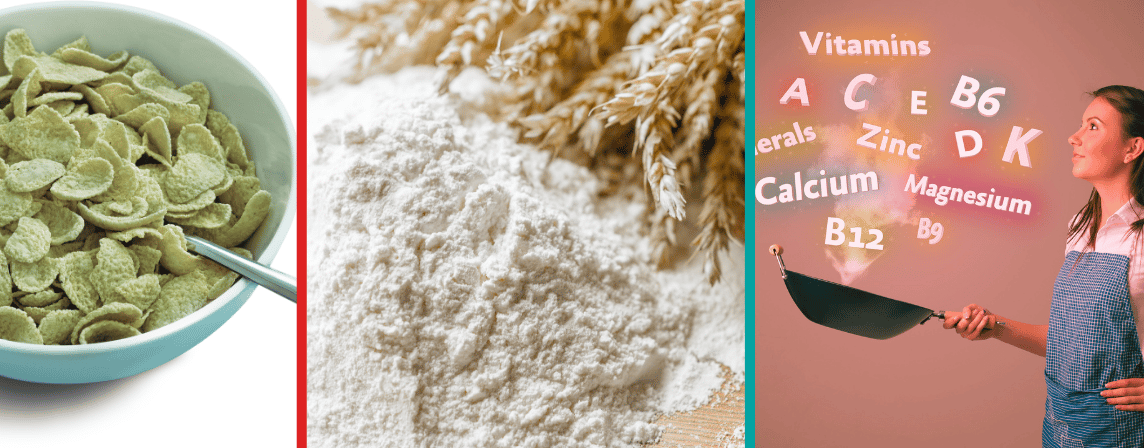
A common sight on cereal packets in the UK is the phrase ‘fortified with vitamins and iron’. Is this because the manufacturers are being generous? Is the product not nutritious enough without the fortification?
Fortification in UK food: 10-second summary
- Many cereals are fortified with vitamins and iron
- By law, non-wholemeal bread flour is fortified with calcium, iron, niacin (vitamin B3), and thiamin (vitamin B1)
- In the USA, milk and salt is fortified with vitamin D and iodine, respectively
Mandatory fortification
Under the Bread and Flour Regulations, flour millers are legally required to add calcium, iron, niacin (vitamin B3), and thiamin (vitamin B1) to white and brown flour. This began in the Second World War, a time when rationing and reduced dietary variety were a national concern.
Wholemeal flour retains the wheat germ and bran which supply these nutrients naturally, therefore it is exempt. Another exception is millers that produce less than 500 tonnes of flour per year.
From December 2026 the flour millers will also be required to add folic acid to non-wholemeal wheat flour. This brings the UK into line with countries that had already taken this step, in order to reduce the risk of neural tube defects during pregnancy.
Voluntary fortification
Breakfast cereals are the most prominent example of voluntary fortification in the UK. The trend is to add vitamins and minerals such as riboflavin (B2), niacin (B3), vitamin B6, folic acid, pantothenic acid, iron, calcium, and sometimes vitamin D and zinc. Levels are usually set at around 25–30% of the recommended daily intake per serving, so a bowl of cereal represents a source of several nutrients without excess.
Other foods commonly fortified on a voluntary basis are done so to try to emulate other foods. These include plant-based milks, which have calcium and vitamin D added to them to mirror the nutritional profile of dairy. Some fruit juices are fortified with vitamin C to replace what is lost during production, and certain sandwich spreads have vitamins A and D added so they are comparable with butter.
Featured Fact
2027 marks 100 years since Planters Foods Limited began adding vitamin A to their margarine in 1927. This paved the way for Government-mandated vitamin fortification during the Second World War.
Source: https://britishprogress.substack.com/p/post-haste-how-the-uks-food-fortification
How is food fortification done in the USA?
Since 1998, all enriched grain products have been required by the Food and Drug Administration (FDA) to contain folic acid, alongside thiamin, riboflavin, niacin and iron. This includes breads, cereals, flour, pasta and rice.
This rule led to a sharp drop in rates of neural tube defects such as spina bifida almost immediately after its introduction. Ensuring folic acid is present in staple foods like bread and flour means pregnant women receive some protection before they even know they need it.
The US also has a long tradition of iodised salt. Since 1924, iodine has been added to most table salt, helping to eliminate a thyroid condition caused by iodine deficiency. In contrast, the UK population relies largely on iodine from dairy products, fish, and eggs.
Another staple food that is fortified in America but not in Britain is milk. In the US, fortification of milk with vitamin D is standard practice and widely expected by consumers, even if not universally mandated.
Criticism of fortification
One school of thought is that fortification enables manufacturers to market ultra processed foods as nutritious and that the better solution is a diet built around whole, varied foods. It’s certainly true that a balanced diet of whole foods is the optimum option, but fortification remains an efficient way to address dietary deficiencies.
It’s an interesting scenario though if you are faced with a synthetic food that includes fortification in that process. However, we can address this quandary by affirming that overeating fast food while taking a multivitamin does not compare to a meal of superfoods.
Compare vitamins and discover where they are naturally found using our interactive vitamin guide.