Best plant-based proteins
Best vegan protein: quick answer
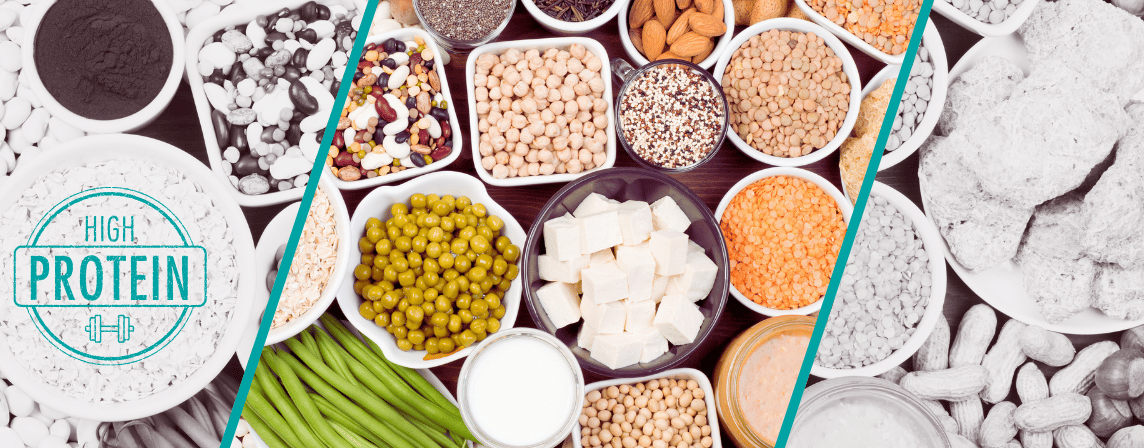
Tofu offers a complete amino acid profile and is highly versatile. Beans deliver fibre and iron alongside the protein, while representing exceptional value for money.
A diet without meat or dairy may seem limiting, but there are plenty of plant-based sources of protein available for vegans. You don’t even have to buy expensive powders and snack bars, as foods such as tofu and beans and grains can provide the right amounts of protein.
Comparing vegan protein sources
| Food | Serving Size | Calories (kcal) | Protein (g) | Carbs (g) | Fat (g) | Fibre (g) | Sugar (g) | Complete Protein | Notes |
|---|---|---|---|---|---|---|---|---|---|
| Tofu (firm) | 100g | 144 | 17.3 | 2.8 | 8.7 | 0.9 | 1.0 | Yes | Set with calcium sulphate; good source of calcium and iron |
| Tofu (silken) | 100g | 55 | 4.8 | 2.0 | 2.7 | 0.3 | 0.6 | Yes | Softer and more water-rich than firm tofu |
| Lentils (cooked) | 100g | 116 | 9.0 | 20.0 | 0.4 | 7.9 | 1.8 | No | Low in methionine; pair with grains for a complete profile |
| Chickpeas (cooked) | 100g | 164 | 8.9 | 27.0 | 2.6 | 7.6 | 4.8 | No | Rich in folate and potassium |
| Quinoa (cooked) | 100g | 120 | 4.4 | 21.0 | 1.9 | 2.8 | 0.9 | Yes | Only common grain that is a complete protein on its own |
| Oats (raw/dry) | 100g | 389 | 13.0 | 66.0 | 7.0 | 10.0 | 1.0 | No | Protein content drops once cooked as the grain absorbs water |
| Whey protein powder | 1 scoop (~39g) | 150 | 26.0 | 1.0 | 1.0 | 0.0 | 1.0 | Yes | Dairy-based; not suitable for vegans or lactose intolerant |
| Pea protein powder | 1 scoop (~25g) | 100 | 20.0 | 2.0 | 2.0 | 1.5 | 0.5 | Yes | Plant-based alternative; higher in iron than whey |
Tofu
Made from coagulated soya milk, tofu is one of the few plant foods that qualifies as a complete protein, meaning it supplies all nine essential amino acids in reasonable proportions. Firm tofu contains roughly 12–17g of protein per 100g, depending on how much water has been pressed out, while soft/silken tofu is considerably lighter at around 5g per 100g.
Beyond protein, tofu offers calcium, iron and manganese, and it’s naturally low in saturated fat. It’s also extremely versatile: it takes on marinades well, can be scrambled, fried, baked or blended into desserts, and works in everything from stir-fries to smoothies. The main drawback is that it’s a processed food, so may be at odds with those striving to stick to whole foods.
Beans and pulses
Lentils, chickpeas, black beans and kidney beans are highly nutritional. They typically provide 8–9g of protein per 100g when cooked. What sets pulses apart is their fibre content: a single serving can provide a substantial share of your daily fibre needs, which supports digestion and helps you feel full for longer.
Pulses aren’t complete proteins on their own, but pairing them with grains (rice and beans, or hummus and pitta) rounds out the amino acid profile. They’re also rich in iron, folate and potassium, and are among the cheapest protein sources available.
Grains
Of all the grains out there, Quinoa is the standout. While a 100g cooked serving provides a modest 4-5g of protein, it’s a complete protein, which is unusual for a plant-based grain. Oats are the volume champion, offering around 13g of protein per 100g in their raw, dry form. Both contribute fibre, particularly the soluble beta-glucan fibre found in oats, which is linked to healthy cholesterol levels.
Neither quinoa nor oats will single-handedly meet your daily protein needs, but as a base for meals they add up meaningfully over a day.
Protein powders and shakes
Protein powders exist mainly to concentrate protein into a small, convenient volume, and they do this well. Whey protein isolate, the most common dairy-based option, delivers around 25–26g of protein per 30–39g scoop, with very little carbohydrate or fat. Pea protein, the leading plant-based alternative, typically provides 15–24g per scoop of 20–33g, alongside a useful dose of iron.
The trade-off is that powders are a supplement, not a whole food. They lack the fibre, vitamins and phytonutrients found in tofu, beans and grains, and rely on processing to isolate the protein. That said, they’re genuinely useful for people with high protein requirements (athletes, older adults, or those recovering from illness) who struggle to reach their targets through food alone. Whey isn’t suitable for vegans or those who are lactose intolerant, though pea, soya and rice protein blends fill that gap.
Protein bars
Protein bars sit somewhere between a snack and a supplement, and quality varies enormously. Protein content ranges from under 10g to around 40g per bar, but many bars pack in 15-20g of added sugar to improve taste and texture. The better options keep sugar to single figures and include at least 3g of fibre, but reading the label is essential, since ‘high protein’ marketing doesn’t guarantee a genuinely healthy product.
Whole foods vs supplements
Whole foods like soya, beans and grains generally offer better overall nutritional value than supplements. They bring fibre and micronutrients alongside their protein which deliver nutritional synergy. Beans and grains are also markedly cheaper per gram of protein than the marketed powders or bars. Convenience and density make the difference, with a scoop of powder quickly delivering as much protein as a substantial meal, without the need for cooking.