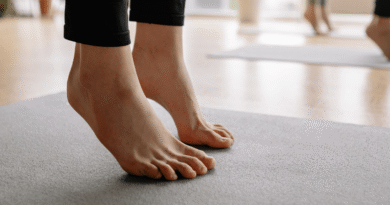

Stay fit at your desk
Whether you’re in the office five days a week or working from your kitchen table, chances are you spend most of your day sitting down. It’s easy to get absorbed in emails and meetings and suddenly realise you haven’t moved in three hours. The good news is that you don’t need a gym membership or special equipment to protect your health. A few simple tweaks to your daily routine can make a real difference.
Why prolonged sitting is unhealthy
When you sit for long, uninterrupted stretches, your circulation slows and your muscles switch off. This can affect various factors from blood sugar regulations to cognitive function.
Our bodies simply aren’t designed to stay in one position for hours, and research suggests that a hard workout before or after work doesn’t fully undo the effects of sitting all day. What matters most is breaking up the sitting period with short spells of gentle activity.
| Category | Tip | Benefit |
|---|---|---|
| Walking habits | Set an hourly reminder to move | Breaks up long sitting periods and restores circulation |
| Walking habits | Take phone calls while walking | Adds movement and often improves thinking |
| Walking habits | Walk before and after work as a "commute" | Helps you switch on and switch off |
| Walking habits | Drink more water | Hydration plus extra trips out of your chair |
| Walking habits | Take the stairs instead of the lift | Easy daily cardio with no extra time cost |
| Posture | Position top of monitor at eye level and arm's length away | Reduces neck strain |
| Posture | Keep feet flat on the floor with knees at a right angle | Supports healthy leg and hip alignment |
| Posture | Sit right back in the chair with lower back supported | Reduces lower back strain |
| Posture | Keep elbows at 90 degrees with shoulders relaxed | Prevents hunched shoulders and arm strain |
| Posture | Change position often; alternate sitting and standing | Avoids strain from holding any one posture too long |
| Stretches | Roll shoulders backwards | Releases shoulder tension |
| Stretches | Tilt ear towards each shoulder | Releases neck tightness |
| Stretches | Stand and reach for the ceiling | Lengthens the spine and hip flexors |
| Stretches | Clasp hands behind back | Opens up the chest |
| Quick tweaks | Stand up while the kettle boils | Free movement built into an existing habit |
| Quick tweaks | Stretch while a file downloads | Uses dead time productively |
| Quick tweaks | Park further away or get off the bus a stop early | Adds walking to your commute |
| Quick tweaks | Walk to a colleague's desk instead of messaging | Movement plus better communication |
Move and stretch
Aim to move for a few minutes at least once an hour. In the office, that might mean walking to a colleague’s desk instead of sending a message, taking the stairs rather than the lift, or using a kitchen or printer on another floor. At home, it could be a lap of the garden, a stroll to the end of the street, or simply pacing while you’re on a phone call.
Get into the habit of moving around every hour or two, especially at lunchtime. There are smart rings and watches that can remind you when you have had a prolonged sedentary period.
A couple of minutes of stretching goes a long way. Try rolling your shoulders backwards, gently tilting your ear towards each shoulder to release your neck, standing up and reaching for the ceiling, or clasping your hands behind your back to open up your chest. None of it requires special kit, and you can turn your camera off during video calls for this 30-second interval.
Hydration boost
Setting yourself a hydration target can help with fitting in regular bitesize exercise sessions in the working day. Firstly, you would need to get up to refill your water bottle and allow further hydration. Another bonus is that the additional water intake would lead to more toilet breaks.
Correct sitting posture at your desk
Movement matters most, but how you sit still counts. Poor posture puts strain on your neck, shoulders and spine, and over weeks and months that strain adds up.
A quick posture check you can do right now:
- Screen at eye level. The top of your monitor should sit roughly at eye height, about an arm’s length away. If you use a laptop, prop it up on a stand or a stack of books and use a separate keyboard and mouse
- Feet flat on the floor. Knees at roughly a right angle, thighs parallel to the ground. Use a footrest if your feet dangle
- Back supported. Sit right back in your chair so your lower back is supported. A small cushion works if your chair lacks lumbar support
- Elbows at 90 degrees. Your forearms should rest level with the desk, with shoulders relaxed rather than hunched up towards your ears
That said, even “perfect” posture becomes a problem if you hold it rigidly for hours. The best posture is your next posture. Shift position often, and mix sitting with standing if you can.