
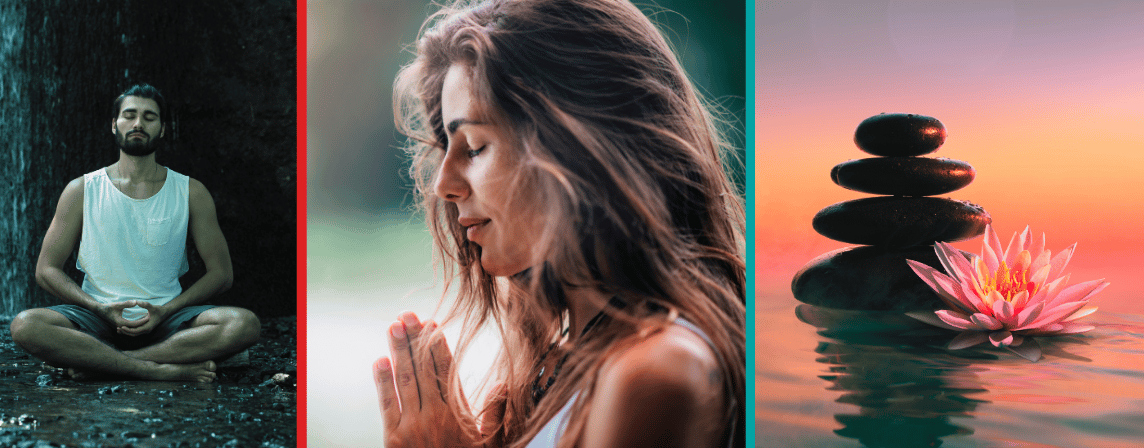
Meditation for beginners
Meditation is closely linked to mindfulness and is much easier than many people imagine. Essentially, if you can relax and be aware of your breathing while managing thoughts, you are meditating. It has been practiced in various forms around the world for centuries and there are practically no limitations or barriers to doing it.
Breathing is a fundamental part of meditation. In fact, you could argue that whenever you take a deep breath to settle the nerves, this is quick meditation. Try our interactive box breathing tool to see how controlled breathing can help reset the body and mind.
How to meditate: step-by-step
Meditation is incredibly accessible with no requirement for any equipment, so you can start meditating right now. Here are 5 steps for simple meditation
Step 1: Choose your position
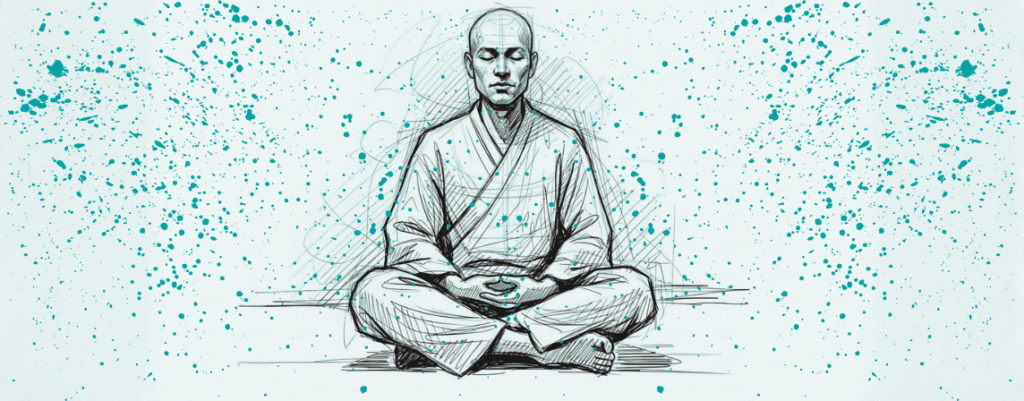
Sit in a firm chair with your feet flat on the floor, or cross-legged on a carpeted floor if that’s comfortable. Keep your spine upright but relaxed, and try not to be rigid. You want to be alert and comfortable rather than slumped. Rest your hands loosely in your lap or on your thighs. You can lie down if sitting is uncomfortable due to injury or disability, but sitting up is better for staying focused.
Step 2: Set a timer
Setting a timer for 5 minutes allows you to be full immersed in the exercise without the need to monitor the duration of the session. Make sure you use a pleasant alarm tone that gently signals the time so you are not jolted away from the exercise.
Step 3: Close your eyes
Closing your eyes is important to aid focus and eliminate other visual stimuli. To turn off your mind you need to look at nothing.
Step 4: Take a few deep breaths
Breathe in through the nose for a count of 4, hold for a second or two, then exhale through the mouth for a count of 6. Taking deliberately slow, deep breaths activates the parasympathetic nervous system and signals that it’s time to slow down. Ease into a deep breathing pattern that suits you.
Think about the air that flows in and out of your lungs, the energising feeling as you inhale and the release upon exhaling. It is crucial to notice when your mind wanders and learn how to drift your focus back to your breathing. Whatever thoughts try to interrupt this process, observe them and gently redirect them. With practice, you will learn to manage distractions and improve focus.
Step 5: Ease back into the room
When the alarm sounds, allow yourself one more conscious breath before opening your eyes again. Notice how you feel as your attention returns to the world around you.
Benefits of meditation
Whether it’s just a few cycles of box breathing or a full 20-minute session, regular meditation can open the door to a list of direct and indirect benefits:
- Reduced stress and anxiety: studies show lower levels of stress hormones in those who meditate
- Improved sleep: particularly for those whose minds race at bedtime
- Better focus and concentration: even brief daily practice strengthens attention over time
- Emotional resilience: meditators tend to recover more quickly from difficult emotions
- Lower blood pressure: the NHS recommends mindfulness to help ease hypertension
- Reduced depression: Mindfulness-based cognitive therapy is proven to help prevent relapses of depression
Mindfulness and Meditation Around the World
The story of meditation is one of the oldest in human history, woven through cultures on every continent long before wellness became an industry. While deeply rooted in spirituality, it is not shackled to any particular religion.
India is where the most documented traditions began. Contemplative practices appear in the Vedic texts dating back to around 1500 BCE. Buddhist meditation, introduced by Siddhartha Gautama in the 5th century BCE, gave rise to techniques still widely used today, including vipassana (insight meditation) and metta (loving-kindness meditation). India remains home to countless ashrams and retreat centres, and practices like yoga and pranayama (breath work) have always been deeply intertwined with meditative traditions there.
China and Japan developed their own rich lineages. Taoist practices cultivated inner stillness as a path to harmony with nature, while Zen Buddhism became famous for its rigorous sitting practice, zazen, and the use of paradoxical riddles called koans to cut through habitual thinking. The Japanese tea ceremony itself is, in many ways, a meditation in motion.
Tibet gave the world Tibetan Buddhist meditation, a vast and elaborate system of visualisation and mantra. Tibetan monks have been studied extensively by neuroscientists. Studies have shown their brains to appear measurably different from those of non-meditators.
In the Christian West, contemplative traditions flourished in monasteries throughout the Middle Ages. Practices like lectio divina (sacred reading) and the Hesychast tradition of the Eastern Orthodox Church share much with Eastern meditation. The 14th-century mystical text The Cloud of Unknowing reads, in places, like a remarkably modern guide to present-moment awareness.
Indigenous cultures across Africa, the Americas, and Australia have long practised forms of deep contemplation, often embedded in ritual, ceremony, and connection to the natural world. This is proof that the human instinct to turn inward is truly universal.
Meditation arrived in the mainstream West largely thanks to the Maharishi Mahesh Yogi, who popularised Transcendental Meditation in the 1960s. He famously invited the Beatles to practise with him in Rishikesh. By the 1970s, Harvard cardiologist Dr Herbert Benson had coined the phrase ‘the relaxation response’ and begun documenting meditation’s measurable effects on heart rate and blood pressure. Today, mindfulness-based cognitive therapy (MBCT) is recommended by the NHS as a treatment for recurrent depression, and mindfulness programmes have quietly made their way into schools, hospitals and boardrooms across the UK.