Non-alcoholic beer
Why non-alcoholic beer is so popular: quick answer
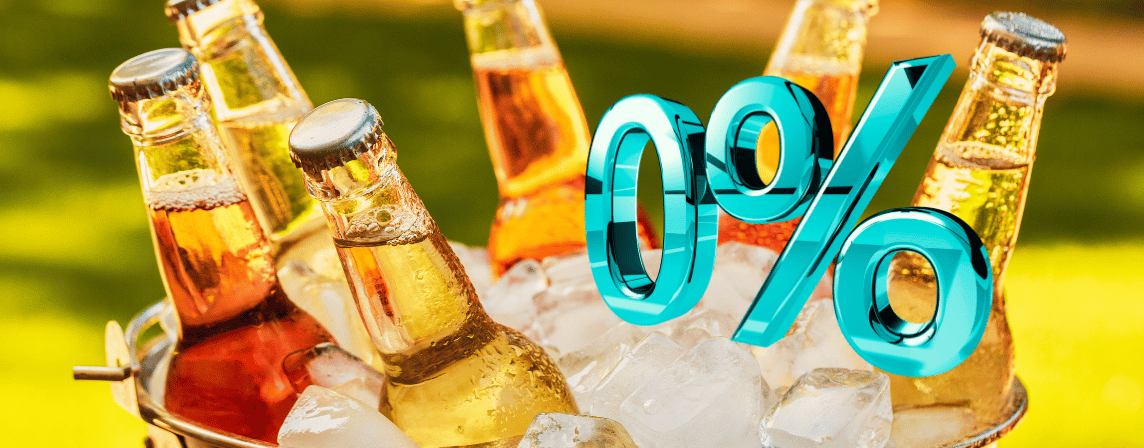
Attitudes to alcohol are changing, with young adults consuming less alcohol than older generations. Most beer brands have developed 0.0% varieties to compete in this growing market
Most pubs, restaurants and supermarkets in the UK today feature a selection of alcohol-free and low-alcohol options. From lagers such as Heineken 0.0, Peroni Nastro Azzurro 0.0% and Lucky Saint to the popular Guinness 0.0, the no/lo shelf has become quite a feature as attitudes to beverages change.
The non-alcoholic beer market in the UK is predicted to grow to around £217 million by 2033, with the total no/low market in the UK doubling between 2023 and 2024.
Why has non-alcoholic beer become so popular?
Since the term ‘designated driver’ became embedded in Western culture toward the end of the 20th century, awareness around drink driving and responsible drinking has improved. In the 2010s a pub-goer abstaining from alcohol would have switched to cola or energy drinks. By the early 2020s, choosing not to drink alcohol no longer meant choosing not to drink beer.
With health and wellness out-trending booze culture, the leading alcohol brands are now competing to tap into this new market.
Heineken launched their 0.0% variety in 2017 and it became the best-selling alcohol-free beer in the UK almost immediately. Now, virtually every lager brand has a ‘zero’ alternative.
| Beer | Brewer | Style | ABV | Calories per 100ml |
|---|---|---|---|---|
| Guinness 0.0 | Guinness (Diageo) | Stout | 0.0% | 17 |
| Heineken 0.0 | Heineken | Lager | <0.05% | 21 |
| Beck's Blue | AB InBev | Pilsner | 0.05% | 13 |
| Stella Artois Alcohol Free | AB InBev | Lager | 0.0% | 18 |
| Budweiser Prohibition | AB InBev | Lager | 0.0% | 21 |
| Corona Cero | AB InBev | Lager | 0.0% | 17 |
| Peroni 0.0 | Peroni (Asahi) | Lager | 0.0% | 20 |
| San Miguel 0.0 | San Miguel (Carlsberg) | Lager | 0.0% | 22 |
| Lucky Saint | Lucky Saint | Unfiltered Lager | 0.5% | 16 |
| Athletic Brewing Run Wild IPA | Athletic Brewing | IPA | <0.5% | 17 |
| Erdinger Alkoholfrei | Erdinger | Wheat Beer | 0.5% | 25 |
| Impossibrew | Impossibrew | Lager | 0.0% | 12 |
| Kaliber | Guinness (Diageo) | Lager | 0.05% | 17 |
| Sources: Impossibrew, Steadydrinker, IWSR, brand nutritional information. ABV/calorie figures may vary slightly by market or can vs. draught format. |
Gen Z and alcohol
With increased restrictions on alcohol advertising on British television and sponsorship of sports events and teams, the generation born between the 90s and 2010s sees alcohol differently to previous generations.
Around a third of 18 to 24-year-olds in the UK now do not drink at all, and others treat alcohol as an occasional treat rather than a social default. Per capita alcohol consumption among Generation Z is 20 per cent lower than among Millennials, and nearly half of young adults now turn to no or low-alcohol options to moderate their intake.
This isn’t teetotalism as a moral stance, but a growing awareness that alcohol’s social functions can often be served just as well without it. Add in the influence of wellness culture and the ubiquity of fitness tracking apps, and it is little wonder that 73 per cent of UK consumers now say they actively prioritise wellness rather than hedonism.
Cost plays a part, too and those who go out boozing spend more than those who don’t. In an era of squeezed household budgets, that matters.
Guinness and alcohol-free beer
The Guinness brewery, owned by Diageo, launched one of the most famous AF beers 40 years ago. Alcohol-free lager Kaliber became a genuine commercial success in 1986, helped by an ad campaign featuring comedian Billy Connolly.
After decades of brewing innovation, Guinness 0.0 arrived in 2021 as a zero alcohol alternative to the world’s favourite Irish stout. The reception has been remarkable and it is now widely regarded as one of the finest alcohol-free beers on the market. Guinness Zero has become a standard fixture in bars and restaurants across the UK, as well as virtually every British supermarket.
How non-alcoholic beer is made
The manufacturing process has advanced enormously in recent years, which explains why today’s alcohol-free beers taste so much better than earlier generations. The key is to brew the beer then de-alcoholise it.
Guinness 0.0 is brewed in exactly the same way as the original: the same water, barley, hops, and yeast, the same fermentation, the same maturation. Only at the end of the process is the alcohol removed, using cold filtration. This is crucial: heat damages flavour compounds, so keeping the process cold preserves the taste profile that makes Guinness what it is. The alcohol and water pass through; the flavour stays behind. The result is a beer that is less than 0.05% ABV; comfortably within the legal definition of alcohol-free.